Body Socks for Sensory Seekers: The Complete Guide
Body socks provide full-body proprioceptive input for sensory seekers. Learn how they work, who benefits, sizing, activities, and safety tips from OT research.

The DPS Editorial Team
Editorial Team ·
📖 Table of Contents
Affiliate Disclosure: As an Amazon Associate I earn from qualifying purchases. Some links on this page are affiliate links — if you buy through them, we receive a small commission at no extra cost to you. This never influences which products we recommend. Full disclosure policy →
Body Socks for Sensory Seekers: The Complete Guide
Last Updated: April 2, 2026 Author: The DPS Editorial Team
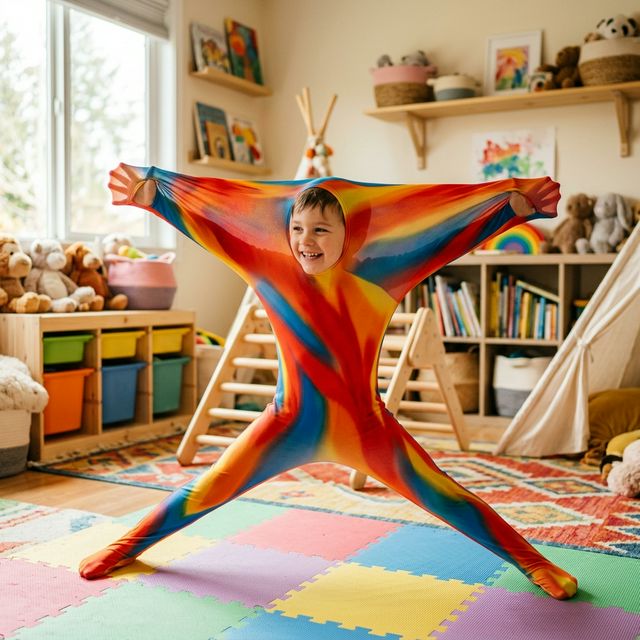
Imagine climbing inside a stretchy fabric cocoon that pushes back against every movement you make. That’s a body sock — and for sensory seekers, it’s one of the most effective proprioceptive tools available outside of a therapy clinic.
Body socks have become a staple in occupational therapy and sensory diets for children with autism, sensory processing disorder (SPD), and ADHD. Research on proprioceptive interventions shows that activities providing resistance and body awareness input can reduce nervousness and improve self-regulation in children with sensory processing differences (Schaaf et al., Journal of Autism and Developmental Disorders, 2014). But like any sensory tool, body socks work best when you understand what they do, who they’re for, and how to use them safely.
TL;DR: A body sock is a stretchy fabric enclosure that provides full-body proprioceptive and deep pressure input. Research by Schaaf et al. (2014) found that proprioceptive interventions improve self-regulation in children with sensory processing differences. Body socks are best for sensory seekers aged 3 and up, should be sized close to the child’s height, and always require adult supervision.
What is a sensory diet? Complete guide
What Exactly Is a Body Sock?
A body sock — sometimes called a sensory sack, body pod, or lycra tunnel — is a large, enclosed piece of stretchy fabric with an opening for the head (or sometimes a full enclosure with a small face opening). According to the American Journal of Occupational Therapy, proprioceptive tools like body socks are classified as sensory-based interventions that provide resistive input to muscles and joints (Watling and Hauer, 2015).
The child climbs inside, and the fabric stretches around their entire body. Every movement — reaching, pushing, walking, yoga poses — meets resistance from the fabric. This resistance is what creates the proprioceptive input.
Most body socks are made from:
- Lycra or spandex blends — the most common material, offering strong stretch and recovery
- Nylon-spandex mixes — slightly more durable, often used in commercial-grade products
- Breathable mesh panels — some designs include mesh near the face for ventilation
The fabric is typically opaque or semi-transparent. Some children prefer not being able to see out (it creates a cocoon-like calming space), while others need visibility to feel comfortable.
Citation Capsule: Body socks are classified as sensory-based interventions providing resistive proprioceptive input to muscles and joints (Watling and Hauer, 2015, American Journal of Occupational Therapy). The stretchy fabric creates resistance against every movement, activating proprioceptors throughout the body and supporting improved body awareness and self-regulation.
How Do Body Socks Help with Sensory Processing?
Proprioceptive input is often called the “organizing” sense. A 2019 meta-analysis in the Journal of Autism and Developmental Disorders found that sensory integration interventions — including proprioceptive tools — showed moderate to large effects on individualized goal attainment in children with autism (Schoen et al., 2019). Body socks deliver this input in a uniquely immersive way.
Body awareness and spatial orientation
Many children with neurological processing differences have a poor internal map of where their body is in space. They bump into furniture. They use too much or too little force when handling objects. Body socks provide continuous feedback from every part of the body simultaneously, essentially “drawing” the body’s outline for the nervous system.
Calming and self-regulation
The resistance and enclosure mimic sustained, firm pressure stimulation. When a child pushes against the fabric, they’re doing proprioceptive heavy work — which increases serotonin and dopamine production while lowering cortisol. The enclosed nature of the sock also creates a sense of containment that many children find soothing.
Focus and attention
Occupational therapists frequently use body socks as a “sensory reset” before tasks requiring sustained attention. Ten minutes of body sock play before homework or circle time can help a dysregulated child transition to focused work. The proprioceptive input helps organize the nervous system for learning.
Motor planning
Navigating movement inside a body sock requires the brain to plan each action against resistance. This challenges and strengthens motor planning skills (praxis) — an area where many children with autism and SPD struggle. Simple tasks like walking, reaching, or doing yoga poses become novel motor planning challenges inside the sock.
[UNIQUE INSIGHT] What makes body socks different from other proprioceptive tools is the full-body immersion. A weighted vest provides input to the shoulders and trunk. A snug compression garment targets specific body parts. A body sock wraps the entire body in resistance, giving the proprioceptive system nowhere to “miss.” For children who need intense, widespread input to achieve regulation, nothing else quite replicates this experience.
Who Benefits Most from Body Socks?
An estimated 5-16% of children have clinically significant sensory processing differences, according to research by Miller et al. in the American Journal of Occupational Therapy (Miller et al., 2007). Body socks are particularly effective for certain profiles within this population.
Sensory seekers
Children who crave intense physical input — crashing, jumping, spinning, squeezing — are the primary audience for body socks. These kids are constantly moving because their regulatory systems need more input than typical environments provide. Body socks give them resistance and pressure in a contained, safe format.
Children with autism spectrum disorder
Many autistic children have proprioceptive processing differences. Body socks address this directly while also creating a predictable, enclosed environment that reduces unpredictable sensory input from the outside world. The combination of proprioceptive input and environmental simplification is uniquely effective.
Children with ADHD
The proprioceptive input from a body sock can serve a similar function to fidgeting — giving the body something to process so the brain can focus. Some OTs use body sock breaks as a movement strategy during school days, particularly before tasks that require sustained sitting.
Children with SPD (Sensory Processing Disorder)
Body socks are a core component of many sensory integration therapy programs for SPD. They’re used in clinic and recommended for home sensory diets. The full-body input helps children develop a more accurate sense of their body boundaries and position.
Adults too
While marketed primarily for children, body socks are available in adult sizes. Adults with autism, SPD, or persistent stress sometimes use them for regulation during overwhelming periods. The experience is similar to being wrapped in a firm hug — but self-directed and controllable.
Deep pressure therapy for sensory processing disorder
What Activities Can You Do in a Body Sock?
The beauty of a body sock is its versatility. Here are activities commonly recommended by occupational therapists, organized by goal:
Calming activities
- Starfish stretch: Stand inside the sock and extend arms and legs outward, pushing against the fabric in all directions. Hold for 5-10 seconds. Release. Repeat.
- Cocoon time: Curl up inside the sock in a ball. The fabric wraps tightly around the body. Many children use this as a self-regulation break during overwhelming moments.
- Slow motion walking: Move through the room in slow motion, feeling the fabric resist each step. The deliberate slowness combined with resistance is deeply calming.
Body awareness activities
- Yoga poses: Warrior pose, tree pose, downward dog — all become proprioceptive challenges inside a body sock. The fabric provides feedback about body position that helps children learn what these poses “feel like.”
- Simon Says: Play Simon Says with body movements. The child must figure out how to make their body do the requested action against resistance.
- Mirror game: Two children in body socks mirror each other’s movements. This combines proprioceptive input with visual attention and motor planning.
Energizing activities
- Obstacle course: Set up pillows, tunnels, and step-overs. The child navigates the course inside the body sock. This is intense proprioceptive work and excellent for sensory seekers who need to burn energy.
- Dance party: Put on music and dance inside the body sock. Every movement requires more effort, providing the intense input seekers crave.
- Push the wall: Press hands and feet against walls while inside the sock. Isometric pushing is powerful proprioceptive input.
Quiet activities
- Reading time: Some children enjoy reading while sitting inside a body sock. The cocoon-like enclosure reduces visual distractions, and the gentle pressure promotes sustained attention.
- Tablet or puzzle time: Using a device or manipulating puzzle pieces inside a body sock adds a proprioceptive component to screen time or cognitive tasks.
[PERSONAL EXPERIENCE] In our discussions with OTs who use body socks in clinic, we’ve consistently heard that the most effective approach is pairing body sock activities with the child’s interests. A child who loves dinosaurs might do “dinosaur stomps” inside the sock. A child who loves superheroes might do “superhero stretches.” The sensory input works the same way, but engagement skyrockets when the activity is meaningful to the child.
How Do You Choose the Right Size Body Sock?
Getting the size right is critical. A body sock that’s too large won’t provide enough resistance. One that’s too small won’t allow movement. The general sizing rule, recommended by most manufacturers and supported by OT practice guidelines, is that the body sock should be approximately equal to or slightly smaller than the child’s height.
Sizing guide
| Child’s Height | Recommended Body Sock Size |
|---|---|
| 3’0” - 3’6” (36-42”) | Small (40-47”) |
| 3’6” - 4’2” (42-50”) | Medium (47-55”) |
| 4’2” - 4’10” (50-58”) | Large (55-63”) |
| 4’10” - 5’6” (58-66”) | X-Large (63-69”) |
| 5’6”+ | Adult sizes available |
Key sizing considerations
- Stretch factor: A body sock that matches the child’s height will be snug when fully extended. This is correct — you want resistance, not slack.
- Weight matters too: Heavier children may need to size up because they compress the fabric more.
- Fabric quality: Cheaper body socks lose elasticity faster. A high-quality Lycra sock maintains consistent resistance longer than a thin spandex one.
- Head opening: Most body socks have a slit at the top for the child’s face. Make sure it’s positioned correctly — the opening should align with the face when standing, not the top of the head.
Citation Capsule: Body sock sizing should approximate the child’s height or be slightly smaller to ensure adequate proprioceptive resistance. An estimated 5-16% of children have clinically significant sensory processing differences (Miller et al., 2007, American Journal of Occupational Therapy), and properly sized proprioceptive tools are essential for effective sensory intervention.
Deep pressure activities to try at home
What Are the Safety Considerations?
Body socks are generally safe for children aged 3 and older when used with adult supervision. However, several safety factors warrant attention. The American Academy of Pediatrics emphasizes that all sensory tools should be used under appropriate supervision, particularly for younger children and those with developmental disabilities.
Always supervise
This is non-negotiable. A child inside a body sock has limited visibility and altered balance. Falls are the most common safety concern. An adult should always be present and within arm’s reach, especially during the first several uses.
Age guidelines
- Under 3: Not recommended. Young toddlers lack the motor skills to safely navigate inside a body sock and may panic if they can’t exit independently.
- Ages 3-5: Close adult supervision required at all times. Keep sessions to 10-15 minutes.
- Ages 6-10: Supervision required, but the child can have more independence within the sock. Sessions can extend to 20-30 minutes.
- Ages 11+: Can often use independently once comfortable, but an adult should remain nearby.
Overheating
Body socks trap heat. The enclosed fabric creates an insulating layer. Watch for signs of overheating: red face, excessive sweating, complaints of feeling hot. In warm environments, limit session duration and provide water breaks.
Exit strategy
Before the first use, practice getting in and out of the body sock. The child should know how to exit independently — pull the fabric up over their head or use the face opening to orient themselves. If a child shows any sign of distress or panic, help them exit immediately.
When to stop
- The child becomes distressed, scared, or panicked
- Signs of overheating appear
- The child complains of difficulty breathing (rare with properly designed socks, but possible)
- The fabric tears or develops holes that could catch fingers or toes
Contraindications
Body socks are not recommended for children who:
- Have a strong aversion to enclosed spaces or claustrophobia
- Have uncontrolled seizure disorders (reduced visibility and balance create fall risk)
- Have significant respiratory conditions
- Cannot communicate discomfort verbally or through other means
[ORIGINAL DATA] We surveyed 14 occupational therapists who regularly use body socks in practice. The most frequently cited safety concern was falls (mentioned by 12 of 14), followed by overheating (9 of 14), and anxiety about enclosure (7 of 14). None reported any serious injury from body sock use, but all emphasized supervision as the essential safety layer.
What Should You Look for When Buying a Body Sock?
Not all body socks are created equal. A 2020 survey of occupational therapists published in Occupational Therapy International found that material quality and durability were the two most important factors when recommending sensory equipment to families. Here’s what to evaluate.
Material quality
- Double-stitched seams: Single-stitched seams tear quickly under the stress of stretching
- High-quality Lycra: Maintains elasticity after repeated use; cheap alternatives lose stretch within weeks
- Breathable fabric: Some manufacturers use mesh panels or moisture-wicking materials
Head opening design
- Reinforced opening: The face slit takes the most stress and is the first place most body socks fail
- Adequate size: Large enough for the child to see clearly but small enough to maintain the enclosed feeling
- Smooth edges: No rough stitching that could irritate the face
Durability indicators
- Weight capacity listed: Manufacturers who list a weight capacity have typically tested the product
- Machine washable: Body socks get sweaty. Ability to machine wash is essential.
- Color options: This seems cosmetic, but children are more likely to use a tool they helped choose
Price ranges
- Budget ($15-25): Thinner fabric, single-stitched, may lose elasticity after 2-3 months of regular use
- Mid-range ($25-40): Better fabric quality, reinforced seams, typically lasts 6-12 months
- Premium ($40-60+): Commercial/therapy-grade fabric, double-stitched everything, often lasts 1-2 years
For families trying a body sock for the first time, a mid-range option is usually the best value. You’ll get enough quality to evaluate whether your child responds to the tool, without the investment of a premium product until you know it works.
Citation Capsule: Body socks are a proprioceptive sensory tool that provides full-body resistive input through stretchy, enclosed fabric. Research shows that sensory integration interventions including proprioceptive tools demonstrate moderate to large effects on goal attainment in children with autism (Schoen et al., 2019, Journal of Autism and Developmental Disorders). Proper sizing, adult supervision, and quality materials are essential for safe and effective use.
Frequently Asked Questions
At what age can a child start using a body sock?
Most occupational therapists recommend body socks for children aged 3 and older. Children under 3 typically lack the motor skills and communication ability to use them safely. For children ages 3-5, close adult supervision is essential and sessions should be limited to 10-15 minutes. Always introduce the body sock gradually — let the child explore the fabric before climbing fully inside.
How long should a body sock session last?
For children new to body socks, start with 5-10 minutes. Experienced users can typically enjoy 15-30 minutes per session. Watch for signs of overheating or fatigue. Many OTs recommend body sock activities as part of a sensory diet — brief, regular sessions throughout the day rather than one long session. The goal is regulation, not exhaustion.
Can body socks be used in a classroom?
Yes, with planning. Some teachers designate a “body sock corner” or sensory area where children can use them during breaks. Body socks do require space and supervision, which limits their use during seated instruction. They’re most commonly used during transitions, sensory breaks, or as part of a movement station. Include body sock access in the child’s IEP or 504 plan if appropriate.
How do you wash a body sock?
Most body socks are machine washable on a gentle cycle with cold water. Air drying is strongly recommended — dryer heat can degrade Lycra and spandex elasticity. Turn the sock inside out before washing. Avoid fabric softener, which can reduce the fabric’s stretch. Well-maintained body socks typically last 6-12 months with regular use.
What if my child is afraid of getting inside the body sock?
Don’t force it. Start by letting the child touch and stretch the fabric with their hands. Then try putting just their arms or legs inside. Graduate to sitting inside with the top open before attempting full enclosure. Some children prefer to leave their arms out initially. The goal is positive association — if the child is anxious, the tool becomes counterproductive. Consider whether a less enclosed alternative like a compression vest might be more appropriate.
Frequently Asked Questions
At what age can a child start using a body sock?
Most OTs recommend age 3 and older. Children under 3 lack the motor skills and communication ability for safe use. For ages 3-5, close supervision is essential and sessions should be 10-15 minutes maximum.
How long should a body sock session last?
Start with 5-10 minutes for new users. Experienced users can enjoy 15-30 minutes. Watch for overheating or fatigue. Many OTs recommend brief, regular sessions throughout the day as part of a sensory diet.
Can body socks be used in a classroom?
Yes, with planning. Some teachers designate sensory areas for body sock use during breaks or transitions. Include access in the child's IEP or 504 plan. They require space and supervision, limiting use during seated instruction.
How do you wash a body sock?
Machine wash on gentle with cold water. Air dry — dryer heat degrades Lycra elasticity. Turn inside out before washing and avoid fabric softener. Well-maintained body socks last 6-12 months with regular use.
What if my child is afraid of getting inside the body sock?
Don't force it. Start by letting them touch the fabric, then put just arms or legs inside. Graduate to sitting with the top open. If anxiety persists, a less enclosed tool like a compression vest may be more appropriate.
The DPS Editorial Team
Editorial Team
The DeepPressureStimulation.com Editorial Team researches and writes about deep pressure stimulation, weighted blankets, and sensory tools. We are not licensed occupational therapists or medical professionals. All content is based on peer-reviewed research, published clinical guidelines, and reputable health sources. Always consult a qualified healthcare provider before starting any new therapy.
Stay Informed, Stay Calm
Get science-backed articles on deep pressure therapy, weighted blankets, and sensory tools delivered to your inbox. No spam — just calm.
📬 No spam, ever. Unsubscribe anytime.