How to Create a Sensory Diet at Home Using Deep Pressure
A step-by-step guide to building a sensory diet using deep pressure stimulation. Includes daily schedules, tool recommendations, and age-specific protocols.

The DPS Editorial Team
Editorial Team ·
📖 Table of Contents
Affiliate Disclosure: As an Amazon Associate I earn from qualifying purchases. Some links on this page are affiliate links — if you buy through them, we receive a small commission at no extra cost to you. This never influences which products we recommend. Full disclosure policy →
A sensory diet has nothing to do with food. It’s a personalized schedule of sensory activities, designed by occupational therapists, that gives your nervous system the specific input it needs to stay regulated throughout the day.
Deep pressure stimulation is one of the most powerful tools in any sensory diet. Here’s how to build one at home.
What Is a Sensory Diet?
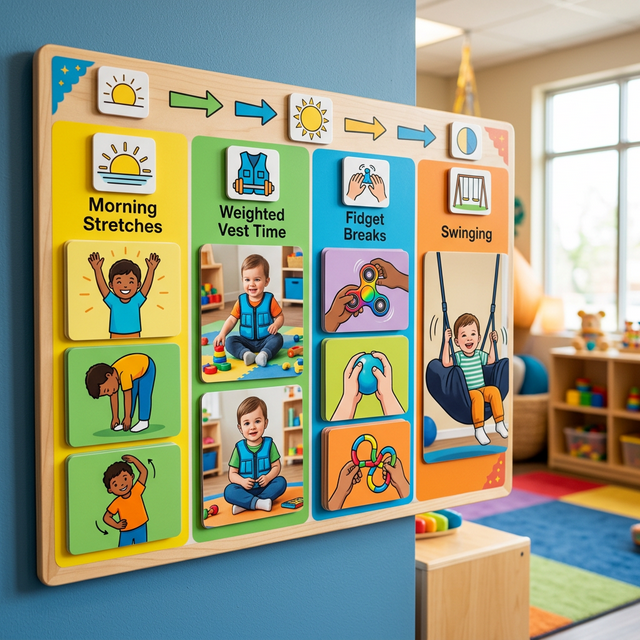
A sensory diet is a structured daily plan of sensory activities designed to meet an individual’s specific sensory needs. Just as a nutritional diet maintains physical health, a sensory diet maintains your nervous system’s equilibrium.
Who needs a sensory diet?
- Children and adults with autism spectrum conditions
- Individuals with ADHD who struggle with focus and regulation
- People with Sensory Processing Disorder (SPD)
- Anyone experiencing chronic anxiety or sensory overload
An occupational therapist (OT) typically designs a sensory diet after completing a full sensory profile assessment. However, many families begin incorporating deep pressure techniques at home while waiting for or alongside professional guidance.
The Science Behind It
Deep pressure stimulation activates the parasympathetic nervous system. When applied at regular intervals throughout the day, it helps the nervous system maintain a state of calm alertness, the optimal zone for learning, working, and connecting with others.
Key physiological effects:
- Serotonin and dopamine increase (mood and focus)
- Cortisol drops by up to 31% (stress reduction)
- Vagus nerve activation (shifts from “fight or flight” to “rest and digest”)
- Sympathetic nervous system downregulation (reduces hyperarousal)
The key insight: consistency matters more than intensity. Brief, regular sensory input throughout the day is more effective than one long session.
Building a Daily Sensory Diet
Step 1: Identify Peak Challenge Times
Every person has predictable “hard” times during the day. Common ones include:
| Time | Challenge | Why |
|---|---|---|
| Morning transitions | Getting ready for school/work | Shifting from sleep state to alert state |
| Arrival at school/work | Entering a stimulating environment | Sensory overload from noise, lights, people |
| Before focused tasks | Homework, tests, meetings | Requires sustained attention |
| Afternoon slump | 2-4 PM | Energy dip, increased irritability |
| Evening wind-down | Transitioning to bedtime | Difficulty downshifting from active to calm |
Step 2: Match DPS Tools to Each Window
| Time Window | DPS Tool | Duration | Goal |
|---|---|---|---|
| Morning | Compression vest under clothes | 20-30 min | Organize nervous system for the day |
| Pre-school/work | Bear hug or weighted backpack | 2-5 min | Ground before entering stimulating environment |
| During focus tasks | Weighted lap pad on thighs | 15-20 min | Sustain attention |
| Afternoon break | Body sock stretching | 5-10 min | Sensory reset |
| Pre-homework | Weighted blanket wrap | 10 min | Transition to focused state |
| Bedtime | Weighted blanket | 20-30 min | Shift to sleep state |
Step 3: Build the Schedule
Sample sensory diet for a school-age child (ages 6-12):
🌅 Morning (6:30 - 7:30 AM)
- 5 minutes of “steamroller” game (roll an exercise ball firmly over child lying on carpet)
- Put on compression shirt under school clothes
- Weighted backpack for the walk to school or bus
📚 School Day (with teacher coordination)
- Weighted lap pad during reading and writing periods
- Sensory break: 5 squeezes of a stress ball between subjects
- Compression vest during transitions between classrooms
🏠 After School (3:00 - 5:00 PM)
- 10 minutes of weighted blanket “burrito” wrap (roll up snugly)
- Snack time with chewy or crunchy foods (adds oral proprioception)
- Homework with weighted lap pad
🌙 Evening (6:00 - 8:00 PM)
- Body sock play or pillow sandwich game (lie between couch cushions)
- Bath time with firm towel drying (provides deep pressure)
- Weighted blanket for bedtime reading
- Weighted blanket stays on during sleep
Sample sensory diet for an adult with ADHD:
🌅 Morning
- Compression shirt under work clothes
- Morning exercise (yoga, weight lifting, heavy work is DPS)
💼 Work Day
- Weighted lap cushion at desk
- Compression gloves during typing
- Midday walk with deep breathing (vagus nerve reset)
🌙 Evening
- 20 minutes under weighted blanket after work (transition ritual)
- Evening stretching or resistance band work
- Weighted blanket for sleep
The “Tofu Sensory Break”
This structured break protocol works well for both children and adults:
- Prepare: Get your DPS tool (weighted blanket, lap pad, or body sock)
- Activate: 5-10 minutes of deep pressure input
- Rest: 2-3 minutes of stillness in a quiet space
- Return: 15-20 minutes of focused work
This comes from the ADHD research showing that brief DPS sessions before cognitive tasks improved sustained attention and task completion rates.
Age-Specific Protocols
Toddlers (Ages 2-4) ⚠️
- Only under direct adult supervision
- Bear hugs and gentle squeezes
- Rolling in a blanket (“burrito”)
- Firm massage with lotion
- Never use weighted blankets or vests unsupervised
School-Age (Ages 5-12)
- Full toolkit: compression vests, weighted lap pads, body socks
- 20-30 minute wearing periods with breaks
- Coordinate with school OT if available
- Let the child choose which tools they prefer
Teens (Ages 13-17)
- Focus on discretion (under-clothing compression)
- Self-directed use with education on when to apply DPS
- Weighted blanket for sleep and study
- Exercise as proprioceptive input (weight lifting, swimming)
Adults
- All tools appropriate with self-monitoring
- Compression clothing under work attire
- Weighted blanket for sleep
- Exercise-based heavy work (resistance training, yoga)
Common Mistakes to Avoid
❌ Using DPS reactively only. The power of a sensory diet is prevention, not just crisis management. Schedule DPS input before challenging times, not just during meltdowns.
❌ Too much, too long. More isn’t always better. Overuse can cause habituation (the nervous system stops responding) or discomfort. Follow the 20-30 minute guideline.
❌ Skipping weekends. Consistency builds neural pathways. A sensory diet works best when it’s daily, including weekends and holidays.
❌ Forcing tools. If a child or adult rejects a particular tool, don’t push it. Offer alternatives. The wrong tool causes stress, which defeats the purpose.
❌ Ignoring the environment. DPS tools work best in combination with environmental modifications: dim lighting, reduced noise, organized spaces.
Tracking What Works
Keep a simple log for the first 2-4 weeks:
| Day | Tool Used | Time | Duration | Mood Before (1-5) | Mood After (1-5) | Notes |
|---|---|---|---|---|---|---|
| Mon | Compression vest | 8 AM | 25 min | 2 | 4 | Calmer at school drop-off |
| Mon | Weighted blanket | 7 PM | 30 min | 2 | 5 | Fell asleep faster |
After 2-4 weeks, patterns emerge. You’ll see which tools work best, at what times, and for how long.
When to Get Professional Help
See an Occupational Therapist if:
- You’re unsure about your or your child’s specific sensory profile
- Current strategies aren’t improving regulation after 4-6 weeks
- Your child has extreme sensory responses (severe meltdowns, self-injury)
- You need school accommodation documentation (IEP/504 plan)
An OT can conduct a standardized sensory profile assessment (like the Sensory Profile-2 or Sensory Processing Measure) and create a precision sensory diet tailored to specific needs.
Frequently Asked Questions
Q: How quickly will a sensory diet work?
A: Many families notice small changes within 1-2 weeks of consistent use. Meaningful behavioral shifts typically appear after 4-6 weeks. The nervous system needs time to build new patterns.
Q: Can I create a sensory diet without an OT?
A: You can absolutely start incorporating DPS tools based on the guidelines above. However, a professional assessment ensures the diet matches your specific sensory profile. Think of it as the difference between following a general fitness plan versus working with a personal trainer.
Q: How often should I update the sensory diet?
A: Review and adjust every 3-6 months, or whenever there’s a significant life change (new school, new job, seasonal shifts). Children’s sensory needs evolve as they grow.
Q: My child’s school won’t accommodate sensory tools. What can I do?
A: An OT can write a clinical letter supporting sensory accommodations. Weighted lap pads are often the easiest first tool to introduce in classrooms, they’re quiet, non-disruptive, and sit on the child’s lap under the desk.
This guide was developed by The DPS Editorial Team. Always consult with your occupational therapist or healthcare provider before beginning a new sensory program, especially for children under age 5.
Related guides:
The DPS Editorial Team
Editorial Team
The DeepPressureStimulation.com Editorial Team researches and writes about deep pressure stimulation, weighted blankets, and sensory tools. We are not licensed occupational therapists or medical professionals. All content is based on peer-reviewed research, published clinical guidelines, and reputable health sources. Always consult a qualified healthcare provider before starting any new therapy.
Stay Informed, Stay Calm
Get science-backed articles on deep pressure therapy, weighted blankets, and sensory tools delivered to your inbox. No spam — just calm.
📬 No spam, ever. Unsubscribe anytime.