Weighted Lap Pads: Benefits, Sizing Guide, and Best Picks for School & Work
Weighted lap pads explained, how they work, sizing guide (5-10% body weight), safety rules, and what to look for for school, classroom, and office use.

The DPS Editorial Team
Editorial Team ·
📖 Table of Contents
Affiliate Disclosure: As an Amazon Associate I earn from qualifying purchases. Some links on this page are affiliate links — if you buy through them, we receive a small commission at no extra cost to you. This never influences which products we recommend. Full disclosure policy →
A weighted blanket works great at night. But what about during a math test, a long meeting, or a car ride?
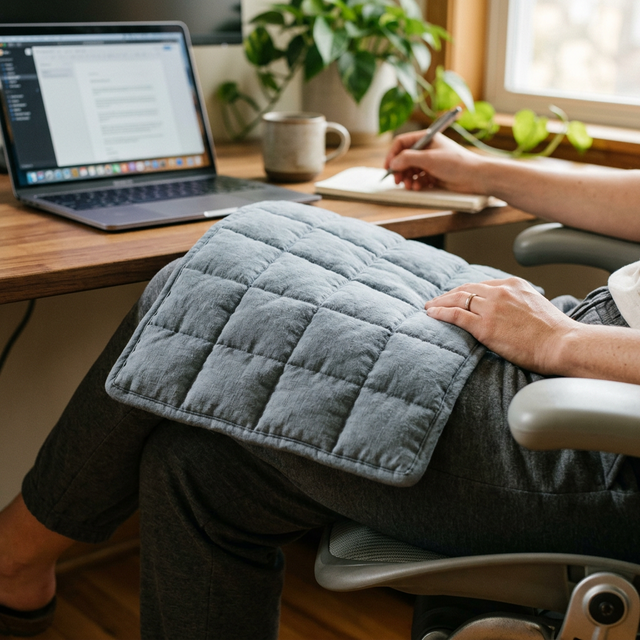
That’s where weighted lap pads come in. Smaller, more portable, and discreet enough to sit unnoticed on a school desk, a lap pad provides targeted deep pressure exactly where you need it, during seated tasks when staying focused matters most.
How Weighted Lap Pads Work
Lap pads work through the same mechanism as weighted blankets: deep pressure stimulation (DPS). Firm, distributed pressure applied to the legs and core activates mechanoreceptors in the skin, triggering a cascade of neurological effects:
- Serotonin and dopamine increase, improving mood and focus
- Cortisol drops, reducing the stress response
- Vagus nerve activation, shifting the nervous system from “fight or flight” to “rest and digest”
- Proprioceptive input, grounding the body in space, reducing the need to fidget
The key difference from a full weighted blanket: a lap pad delivers this input precisely during seated tasks like reading, writing, studying, and desk work, times when focus matters most and a full blanket isn’t practical.
Who Benefits Most
Children and Adults with ADHD
ADHD brains often seek sensory stimulation to maintain arousal and focus. Without it, the mind wanders and the body fidgets. A lap pad gives the nervous system the organized input it needs to filter out background distractions.
Research shows that proprioceptive input from DPS tools during desk tasks:
- Improves sustained attention during academic work
- Reduces restless movement and fidgeting
- Decreases hyperactivity scores during classroom observations
Autistic Children and Adults
Many autistic individuals experience sensory processing differences that make noisy, visually busy environments deeply challenging. A lap pad provides organizing sensory input that helps calibrate the nervous system, particularly useful during the school day when there are few opportunities to step away.
Classroom Use
A weighted lap pad is often the easiest first sensory tool to introduce in a school setting:
- Sits silently on the lap, under the desk, barely visible
- Doesn’t disrupt other students
- Easy for the child to remove independently
- Doesn’t require special furniture or setup
OT tip: If you’re trying to get sensory accommodations into a school IEP or 504 plan, a lap pad is usually the least resistance path because it’s so unobtrusive.
Workplace and Office Use
Adults with ADHD or sensory processing differences often find open-plan offices overwhelming, the noise, movement, and visual clutter constantly pull attention away from work. A lap pad under the desk provides a quiet anchor that helps the nervous system stay grounded during long work sessions.
Sizing Guide
Weight Formula
The standard guideline for weighted lap pads mirrors weighted blankets:
5% to 10% of body weight
| User Body Weight | Recommended Lap Pad Weight |
|---|---|
| 30 lbs (toddler) | 1.5 – 3 lbs |
| 50 lbs (child) | 2.5 – 5 lbs |
| 80 lbs (older child) | 4 – 8 lbs |
| 120 lbs (teen/adult) | 6 – 12 lbs |
| 160 lbs (adult) | 8 – 16 lbs |
| 200 lbs (adult) | 10 – 20 lbs |
When between sizes, always choose lighter. More isn’t better, physical comfort and the ability to move the pad independently matter more than maximum pressure.
Size and Coverage
Lap pads typically measure 12” × 18” to 16” × 22”. The goal is coverage across the thighs without hanging too far off the knees. For classroom use, smaller is generally better, it needs to sit on a standard desk chair without touching the floor.
What Makes a Good Weighted Lap Pad
Three features separate good lap pads from mediocre ones:
1. Adjustable Weight
Look for lap pads with removable weighted inserts. This lets you fine-tune the pressure as the child grows, or dial back the weight if it’s too much during an adjustment period.
2. Machine-Washable Cover
If it’s going to school every day, it needs to be washable. Look for a removable, washable outer cover. Some lap pads have a sewn-in fill that makes washing difficult, avoid these.
3. Non-Slip Backing
A non-slip or textured backing keeps the pad in place on a smooth chair or desk surface. Without this, the pad shifts around every time the child moves, which is distracting.
Bonus Features to Consider
- Two-sided textures: Some pads have a smooth side and a textured side for different sensory preferences
- Neutral colors: Important for older kids and adults who don’t want it to be noticeable
- Travel case or bag: Useful for kids who move between classrooms or carry it to therapy
Safety Rules
Age Restrictions
- Never use weighted products on children under 2 years old
- Ages 2-4: direct adult supervision only, lighter is better
- Ages 5+: appropriate with proper sizing
Core Safety Rule
The user must always be able to remove the lap pad independently. Never strap or secure a weighted product to a child so they cannot remove it themselves.
When to Stop
Remove the lap pad immediately if the user:
- Shows signs of distress or agitation
- Complains of discomfort, overheating, or leg numbness
- Tries to push it off
Contraindications
Avoid weighted lap pads for users with:
- Circulation disorders affecting the legs
- Orthopedic injuries to the hips, knees, or thighs (without medical clearance)
- Severe sensory defensiveness (these children find any pressure aversive, start with lighter touch first)
How to Introduce a Lap Pad
For Children at School
- Start at home first. Introduce the lap pad during a calm, preferred activity (watching a movie, reading) before sending it to school.
- Use it ≤ 20-30 minutes at a time. Set a timer at first, starting short and building up is better than overwhelming.
- Let the child control it. They put it on, they take it off. This builds trust and prevents aversion.
- Coordinate with the teacher. Send a note explaining what it’s for and how to use it safely.
For Adults at Work
- Place it on the lap during meetings or desk sessions
- Pair with compression clothing for maximum sensory support
- Most adults use it for 1-2 hour blocks, removing it during breaks
Lap Pad vs. Weighted Blanket: Which Do You Need?
| Situation | Best Tool |
|---|---|
| Homework and studying | Lap pad |
| Classroom focus | Lap pad |
| Office/desk work | Lap pad |
| Sleep and bedtime | Weighted blanket |
| Relaxing at home | Weighted blanket |
| Travel (plane, car) | Lap pad |
| High-stimulation environments | Both (lap pad on-site, blanket to decompress after) |
Bottom line: Most people who need daily sensory support benefit from both. A lap pad for daytime, a weighted blanket for sleep.
Frequently Asked Questions
Q: Can a lap pad replace a weighted blanket?
A: They serve different purposes. A lap pad is for daytime seated focus; a weighted blanket is for sleep and relaxation. For maximum benefit, use both.
Q: How do I know if a lap pad is helping?
A: Track focus and mood before and after use. Most parents and teachers notice reduced fidgeting and better on-task behavior within the first 1-2 weeks of consistent use.
Q: My child keeps taking it off after 5 minutes. Should I put it back?
A: No. If a child removes a sensory tool, that’s communication. Let them have control. Over time, they may naturally start using it for longer periods as they connect it with the calming effect.
Q: Can a lap pad be used during meals?
A: Yes, many sensory-seeking children benefit from a lap pad during mealtimes, which are often high-sensory, high-demand situations.
Written by The DPS Editorial Team. For informational purposes only, consult your occupational therapist for individual recommendations.
Related guides:
The DPS Editorial Team
Editorial Team
The DeepPressureStimulation.com Editorial Team researches and writes about deep pressure stimulation, weighted blankets, and sensory tools. We are not licensed occupational therapists or medical professionals. All content is based on peer-reviewed research, published clinical guidelines, and reputable health sources. Always consult a qualified healthcare provider before starting any new therapy.
Stay Informed, Stay Calm
Get science-backed articles on deep pressure therapy, weighted blankets, and sensory tools delivered to your inbox. No spam — just calm.
📬 No spam, ever. Unsubscribe anytime.